Breaking it Down: Discover Where Your Home Uses Energy
By: Mitch Ross
While helping my daughter with a homework assignment, I could tell that, although she was capable of solving the problem, it seemed so overwhelming that she developed a mental block. She simply didn't know where to start. It was only after we broke the problem into smaller, more manageable pieces that she was able to work through it and find the solution.
Understanding your home’s energy use can feel much the same way.
When you receive your electric bill, you see two main things: how much electricity you used and how much it cost. What you don’t see is where that energy was used. Since homes consume electricity in many ways throughout the year, it can be difficult to know where to focus your efforts when trying to reduce energy consumption.
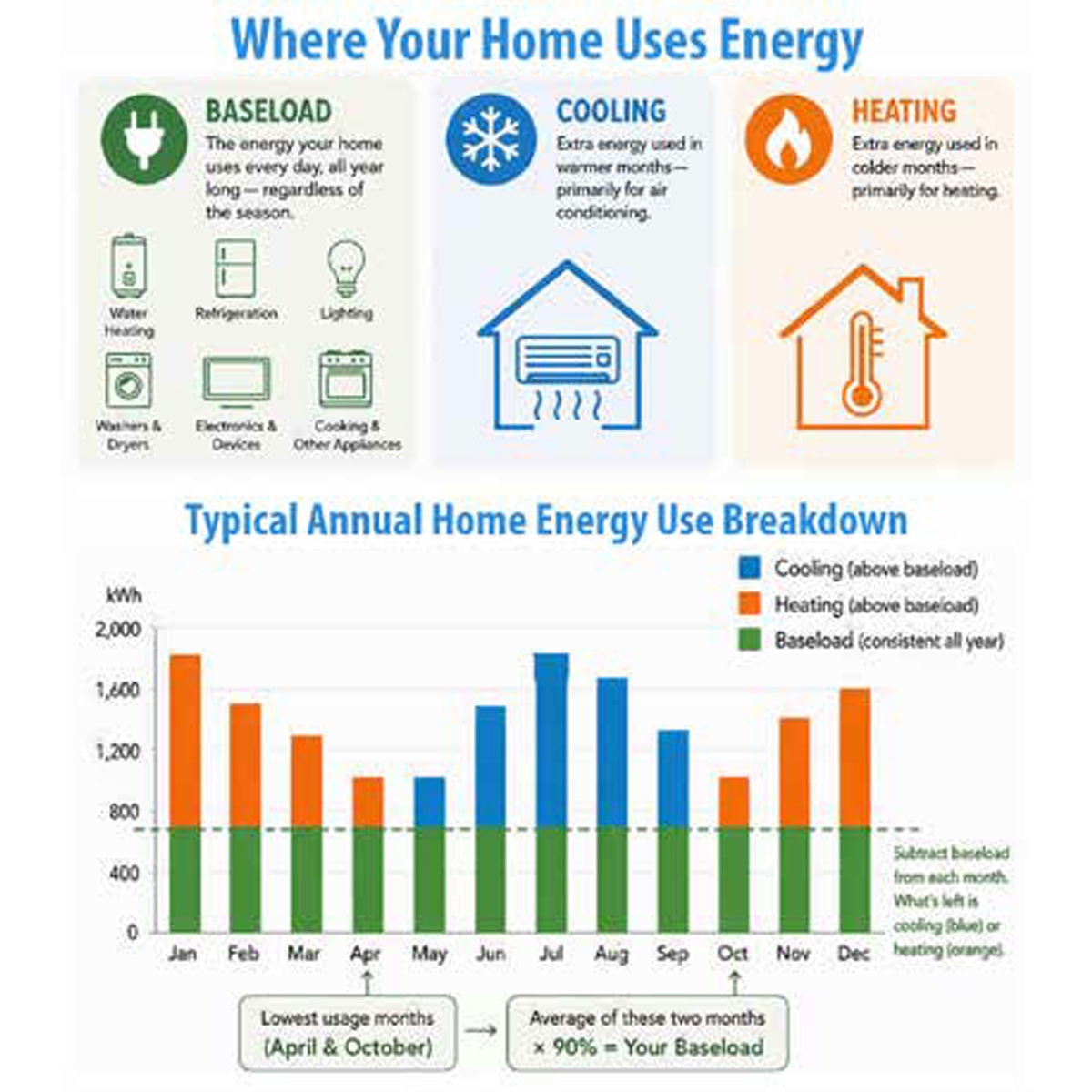
The good news is that you can break this problem down into more manageable parts. By looking at your monthly usage history, you can generally break your home’s energy consumption into three basic categories: baseload, cooling and heating.
Baseload
Baseload is the portion of your energy use that remains relatively consistent throughout the year and is not heavily influenced by outdoor temperatures. This includes water heating, refrigeration, lighting, appliances such as washers, dryers, dishwashers and ovens, as well as televisions, chargers, computers and other electronic devices.
To estimate your baseload, identify the two months with the lowest electricity usage —typically during the spring or fall when neither air conditioning nor heating is used extensively. Approximately 90% of the energy consumed during those months can be considered your home’s baseload.
Cooling and heating
The remaining energy use generally falls into two seasonal categories: cooling and heating. Once you’ve estimated your baseload, simply subtract that amount from each month’s total usage. During summer months, the additional consumption is largely attributable to air conditioning. During winter months, the increase is generally due to heating.
Seeing your energy use broken down in this way can help identify where your greatest opportunities for savings exist.
If your baseload is very high, typically over 1,000 kilowatt-hours per month, then looking for ways to reduce appliance or hot water usage should pay off. If baseload is low, and the summer and/or winter bills seem to be the problem, focus on air sealing, insulation, duct sealing or HVAC adjustments to see the biggest improvements. For energy-savings tips, visit arkansaslivingmagazine.com/story-category/smart-energy-tips/.
Mitch Ross is the energy efficiency manager for the Electric Cooperatives of Arkansas.