The Power to Save a Life: Prepare to Act When It Matters Most
By: Brad Castor, President/CEO
February is American Heart Month. It’s a time to focus on heart health, and just as importantly, what happens when every second counts. Cardiac emergencies don’t wait for perfect conditions, and survival often depends on how quickly someone nearby is willing and prepared to act.
That’s why training matters.
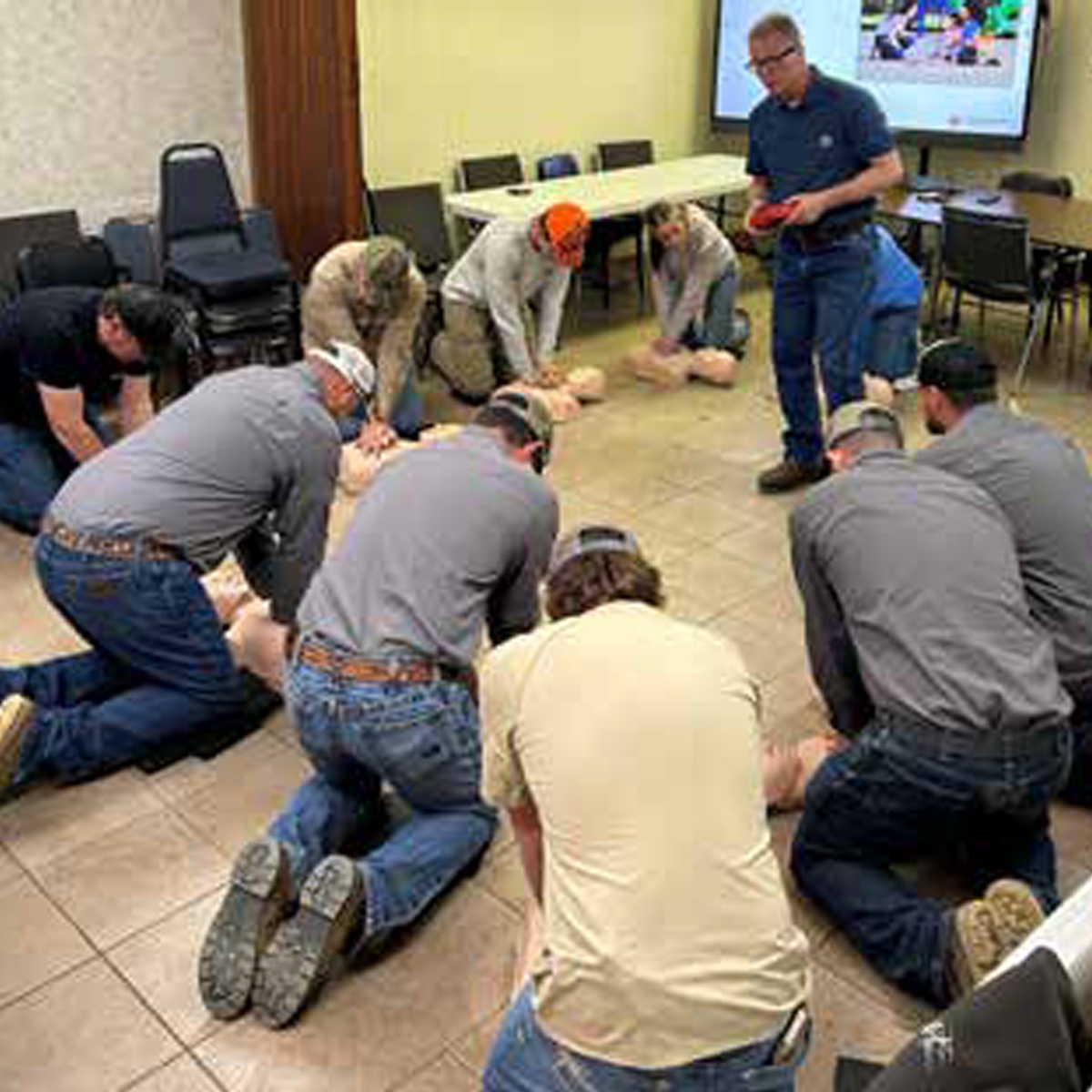
At Rich Mountain Electric, safety and preparedness are not optional. Our lineworkers are all trained and certified in cardiopulmonary resuscitation (CPR), automated external defibrillator (AED) use and first aid. They also regularly complete extensive pole-top and bucket truck rescue training.
Rescue training is required when a lineworker becomes unconscious or unresponsive while working and is unable to get down from a pole or bucket truck on their own. In these situations, fellow lineworkers must act quickly and skillfully to safely lower their co-worker to the ground so lifesaving care can begin.
These skills are essential in our line of work, where employees may be first on the scene in remote locations or emergency situations. But the value of this training goes far beyond the job — it’s about being ready to help co-workers, family members, neighbors or strangers when a life is on the line.
Cardiac arrest remains a leading cause of death in the U.S., claiming more than 436,000 lives each year. Brain damage can begin within four minutes, and survival chances drop rapidly without intervention. According to the American Heart Association, immediate CPR can double or even triple a person’s chance of survival by keeping blood and oxygen flowing until professional help arrives.
AEDs are another critical link in the chain of survival. These portable devices are designed to be used by anyone, with clear voice and visual prompts that guide the user step by step. An AED will only deliver a shock if it’s needed — you can’t hurt someone by using one in an emergency. When CPR and AED use are combined, survival rates increase dramatically.
Steps you can take:
- Get trained in CPR, AED and first aid through the American Red Cross or American Heart Association.
- Encourage workplaces, schools and community spaces to make AEDs visible and accessible.
- Be ready to act — call 911, start CPR and use an AED if one is available.
At our cooperative, preparedness is part of our culture. We believe a trained community is a stronger, safer community. This American Heart Month, let’s turn awareness into action — because when it comes to saving a life, readiness makes all the difference.